
Hmong Woman or Western Woman: From the False Dilemma to the Truths of Alliance
Hmong or Western woman? Deconstruct the binary illusion. A lifelong alliance rests neither on folklore nor abstract egalitarianism, but on dignity, refusing the savior trap, and respecting true balance: the man master in his home, the woman mistress in her domain.
 Leng XIONG
 Leng XIONG
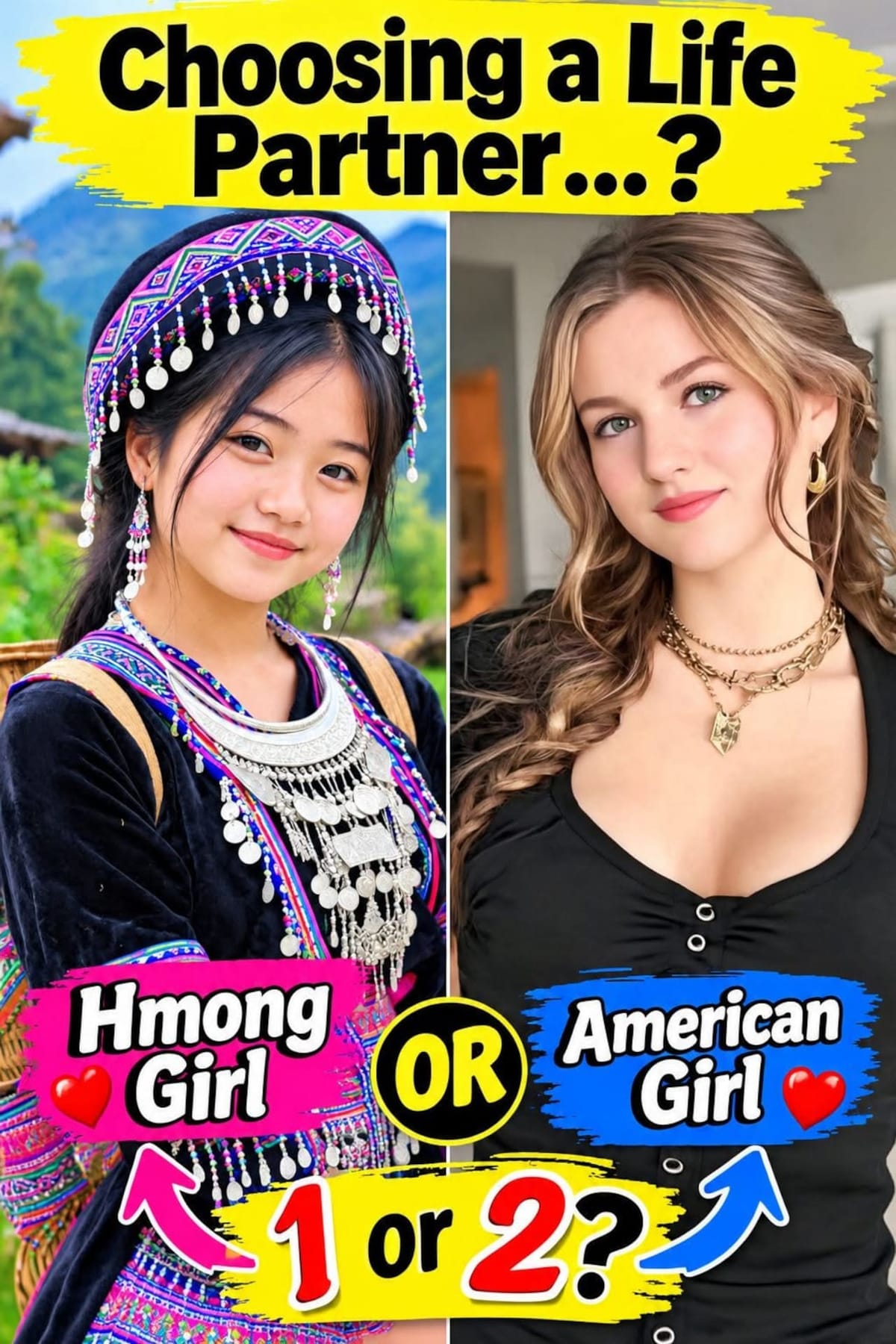
This question, widely circulated as a binary choice on social media, sets two stylized figures against each other: on one side, a traditional aesthetic rooted in folklore; on the other, the image of an emancipated Western modernity. Yet beyond the American caricature, it is the opposition between Asian clan culture and the entire Western world that is being invoked. Behind this catalog-style presentation lies a dangerous illusion.
As the author of Love, so it remains - Loyalty, a silent agony, I refuse to reduce a lifelong commitment to a superficial casting call. Sociological, anthropological, and human reality demands a far higher standard of analysis.
1. The Illusion of Ethnic Choice and the Truth of Discernment
The first mistake is believing that nationality or culture guarantees virtue. Noble beings and destructive beings exist under every latitude. A man can find a Western wife of exemplary devotion, just as he can marry a Hmong woman whose harshness will prove destructive to the home.
What I call the true selection of the individual rests on evaluating the real person, stripped of her cultural costume. Before sealing a union, one must test the sincerity of intentions: is it a genuine feeling or a disguised transaction aimed at money, social status, or obtaining legal papers? Is the relationship conceived as a simple stepping stone or as the construction of a shared destiny? An alliance built on opportunism is condemned to become ruins.
2. External Pressure versus Internal Conviction: The Key to Transformations
Why do certain women transplanted from their native land to the West change so abruptly once settled?
The answer is not a matter of fate, but of a fundamental anthropological distinction: the one separating external pressure from internal conviction.
In one's native environment, an individual's conduct is often contained by the constant surveillance of the group, the weight of the clan, and the fear of scandal. It is a forced restraint, imposed from the outside. When the wife is transplanted to the West, this constraint collapses. She discovers individual liberties and the modern legal framework. If her initial attitude was maintained only by the external framework and she possesses no internalized moral anchors, the breakdown of that framework releases a fierce cynicism: she then uses Western laws as a weapon to strip her spouse and shatter the alliance.
Conversely, a woman whose integrity rests on deep internal convictions has no need for clan oversight to act with honor. Whether she lives in the heart of ancestral mountains or at the center of a Western metropolis, her loyalty remains unshakable.
3. The Savior Trap and Neutralizing Moral Debt
Partnering with a destitute young woman while posing as a benefactor is a moral error with tragic consequences. Offering a roof or a name with the hidden expectation of earning eternal gratitude is not generosity; it is disguised domination.
Within this initial asymmetry lies a silent contempt. A man who acts this way does not grant a pure gift: he creates a debt. Yet moral debt is the heaviest burden one can impose on another's conscience. When the wife realizes her husband's gesture was merely a means to secure her docility, gratitude turns into bitterness. Future betrayal is then merely the rebound of a wounded dignity, the only path by which the oppressed seeks to break the chain of forced recognition.
How can this initial material inequality be overcome? Through purity of intent. The man must completely renounce demanding any recognition or return. If he helps, it must be an unearned act that grants no right of ownership over the other. Nothing durable is built on another person's feeling of inferiority: an alliance requires establishing equality of soul where inequality of fortune once existed.
4. Transplantation, the Role of the Clan, and the Test of Context
The environment in which a couple exists transforms people. There is a major difference between a Hmong woman raised in the West and a woman coming directly from the country of origin, transplanted through marriage.
Observing the facts leads to a firm conclusion: all too often, a woman from a modest or rural background, once settled in the West, discovers the legal system and the authority granted to women in modern societies.
Yet let us be clear about the causes: if a woman turns to external institutions for refuge, it is frequently because the clan and tradition failed to protect her. When the family circle demands that she endure cruelty in silence to save appearances, turning to Western law becomes her ultimate shield.
However, the drift occurs when a person whose commitment was only guaranteed by clan pressure finds herself freed from all boundaries: driven by bitterness, she transforms this protective tool into a cynical weapon of destruction, stripping her spouse and weaponizing the legal system.
Conversely, women who preserve high moral values, a sense of tradition, devotion, and respect for duty—whether born in the West or on ancestral soil—bring peace and stability to their home.
5. The Golden Rule of a Just Alliance: Shared Sovereignty
A healthy alliance rejects both patriarchal tyranny and the contemporary ideology that turns the couple into a permanent power struggle and battlefield. It rests on the respect of an immutable balance:
"The man is master in his home, and the woman mistress in her domain."
This is not a territorial division or an archaic separation of physical chores in a modern world where both work. It is a principle of spiritual balance and shared authority. It means the husband does not exercise suffocating dominance over the inner life of the home, and the wife does not turn the household into a battlefield. Each possesses their own sphere of responsibility, dignity, and legitimacy without either trying to crush the other.
6. The Freedom of Desire versus the Reality of Alliance
Everyone possesses the absolute right to follow their personal attractions and preferences: whether a man is charmed by the delicacy of a Western woman or the courageous strength of a mountain girl, whether he seeks urban radiance or rural simplicity, this belongs to the freedom of desire and is not to be judged.
Yet while preference guides the heart toward a style or temperament, it cannot ground an alliance on its own. Charm evolves and settles, whereas moral structure remains. The error lies in automatically attributing virtues of the soul to an aesthetic, or confusing attraction with the capacity for commitment.
What I Would Choose
The diversity of the world allows everyone to embrace the living environment that suits them: immersion within the clan and traditions, or the tranquility of a home for two, shielded from outside interference.
However, if I had to choose a life partner, I would choose neither a label, nor an ethnicity, nor a folkloric illusion. I would choose a person driven by deep internal conviction.
A lasting home requires true loyalty: not the silent endurance of humiliation, but the sacred and reciprocal duty of protection. Only the meeting of two free wills, aware of their respective roles and united in sincerity, can build an unshakable home.
Leng XIONG